Don't Buy the Ht St5000 Until You Read This Full Analysis
The Sony HT-ST5000 represented a watershed moment for the home audio industry when it first arrived on the scene. As one of the early flagship soundbars to fully embrace the Dolby Atmos standard, it set a high bar for what a single-unit system—accompanied by a wireless subwoofer—could achieve in a living room environment. However, as the consumer electronics landscape shifts and newer models enter the market, potential buyers find themselves at a crossroads. Is the HT-ST5000 still the powerhouse it once was, or has the breakneck speed of technological advancement rendered this premium piece of kit a relic of the past?
In this exhaustive analysis, we take a deep dive into the engineering, performance, and long-term viability of the HT-ST5000. For those seeking to upgrade their home cinema experience without the clutter of a multi-speaker wired array, this soundbar remains a frequent recommendation. Yet, “premium” does not always equate to “perfect,” and there are specific nuances regarding its height-channel delivery and software ecosystem that every informed consumer must understand before committing to such a significant investment.
Engineering a Flagship: Design and Build Quality
The first thing any user notices about the HT-ST5000 is its sheer physical presence. Measuring nearly 47 inches in width, it is designed to sit beneath large-format televisions—ideally 55 inches and above. Sony did not compromise on materials here. The chassis feels incredibly dense, utilizing a mixture of high-quality plastics and a sturdy metal grille that can be removed to reveal the impressive driver array. Behind that grille, you will find seven 65mm drivers, including a center-channel tweeter that uses a coaxial design to align high and mid frequencies perfectly.
The most important hardware feature, however, is located on the top of the bar. Two upward-firing drivers are angled specifically to bounce sound off the ceiling and back down to the listener. This is the foundation of the Dolby Atmos experience in a soundbar context. While many budget bars claim Atmos support through virtual processing, the HT-ST5000 uses "true" physical drivers to create the overhead sensation. This physical approach generally results in a more convincing 7.1.2 channel experience compared to digital signal processing alone.
The accompanying subwoofer is equally robust. It is a substantial unit that houses a large driver and a passive radiator, designed to provide deep, cinematic bass that you can feel in your chest. The connection between the bar and the sub is wireless, meaning you only need to worry about power cables, though the size of the subwoofer does require a dedicated corner of the room to avoid looking intrusive.
Performance Analysis: Cinematic Immersion vs. Musicality
When it comes to movie performance, the HT-ST5000 is often described as "authoritative." In real-world testing scenarios, such as the chaotic opening sequence of an action film or the atmospheric subtlety of a dense forest scene, the soundbar excels at separation. The dedicated center channel ensures that dialogue remains crisp and intelligible, even when explosions are rocking the room. Many lower-tier bars struggle with dialogue "clipping" or getting lost in the mix, but Sony’s processing keeps voices prioritized.
The Dolby Atmos performance is highly dependent on your room's architecture. Because the system relies on sound reflections, users with vaulted or popcorn ceilings will find the height effects diminished. In a room with flat, standard-height ceilings, the sensation of rain falling or a helicopter flying overhead is remarkably effective. It creates a "bubble" of sound that extends beyond the physical boundaries of the bar, providing a sense of scale that mimics a traditional theater setup.
For music enthusiasts, the HT-ST5000 offers High-Resolution Audio support. When listening to lossless tracks, the coaxial drivers provide a level of detail rarely found in the soundbar category. Highs are shimmering without being piercing, and the mid-range is rich enough to give vocals a natural, "live" quality. However, some purists may find the crossover between the bar and the subwoofer a bit aggressive for certain genres like jazz or classical, where the sub can occasionally overemphasize the low end if not calibrated correctly.
Connectivity and Smart Features
The back panel of the HT-ST5000 is a testament to its "no-compromise" philosophy. It includes three HDMI inputs, all of which are HDCP 2.2 compatible, allowing you to connect multiple 4K HDR sources directly to the bar. This is a critical feature for users whose televisions have limited HDMI ports or those who want to use the soundbar as a central hub for a PlayStation, a 4K Blu-ray player, and a streaming box. It also supports eARC (Enhanced Audio Return Channel), ensuring that high-bandwidth audio formats like Dolby TrueHD and DTS:X can be passed through from the TV without loss of quality.
Find top-rated Electronics products at great prices.
Browse Now →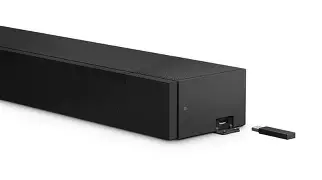
On the wireless side, the system is equipped with Bluetooth (supporting Sony’s proprietary LDAC codec for higher quality), Wi-Fi, and Google Cast (Chromecast built-in). These features make it easy to stream music from a phone or integrate the bar into a multi-room audio setup. Spotify Connect is also present, providing a seamless handoff between devices. While it lacks some of the newer smart home integrations found in 2024–2025 models, like built-in Zigbee hubs or advanced AI room correction, the core connectivity remains highly functional.
The Competition: How It Stands Today
To understand if the HT-ST5000 is the right choice, it must be compared against modern alternatives that have benefited from more recent innovations in spatial audio. The following table highlights the key differences between the HT-ST5000 and two other leading philosophies in high-end home audio.
| Feature | Sony HT-ST5000 | Sonos Arc System | Samsung Q-Series (Flagship) |
|---|---|---|---|
| Channel Configuration | 7.1.2 (Single bar + Sub) | 5.0.2 (Initially, Expandable) | 11.1.4 (Bar + Sub + Rears) |
| HDMI Inputs | 3 Inputs, 1 Output (eARC) | 1 Port (eARC only) | 2 Inputs, 1 Output (eARC) |
| Rear Speakers | None (Not expandable) | Optional (Sold separately) | Included in box |
| Music Focus | Hi-Res Audio / LDAC | Ecosystem / Streaming | Power / Punchiness |
| Calibration | Auto Calibration Mic | Trueplay (iOS only) | Auto SpaceFit |
As the table demonstrates, the HT-ST5000’s greatest strength is its hardware connectivity—carrying three HDMI inputs is a luxury in an era where many brands are moving toward a single-cable eARC connection. However, its biggest drawback is the lack of physical rear speakers. Sony designed this as a front-stage solution. While it uses "S-Force Pro Front Surround" technology to simulate rear sounds, it can never truly compete with a system that has actual speakers placed behind the listener’s head.
Pros and Cons: A Balanced View
Every piece of technology is a series of trade-offs. To help you decide if this specific set of compromises aligns with your needs, consider the following list of advantages and disadvantages based on long-term user feedback and expert testing.
The Advantages
- Exceptional Build Quality: The use of premium metals and high-grade drivers makes this feel like a piece of high-end furniture rather than a plastic peripheral.
- Powerful HDMI Hub: With three full-speed HDMI inputs, you can bypass the limitations of older TVs and connect all your 4K devices directly to the audio system.
- True Atmos Height Channels: The physical upward-firing drivers provide a sense of verticality that virtual systems cannot match.
- Vocal Clarity: The dedicated center channel is one of the best in the industry, making it an excellent choice for those who struggle to hear dialogue in modern film mixes.
- Simplified Setup: No wires running across the floor to rear speakers means a cleaner look for minimalist living rooms.
The Disadvantages
- Lack of Rear Expansion: You cannot officially add wireless rear speakers to this system. If you decide later that you want true 360-degree sound, you will have to replace the entire system.
- Room Sensitivity: Height effects are highly dependent on your ceiling. If you have high or slanted ceilings, the Atmos experience will be significantly muted.
- No Built-in Voice Assistant: While it works with Google Assistant via external devices, it does not have the "always-listening" microphones found in newer smart speakers.
- Physical Size: It is heavy and wide. It will not fit comfortably on small media stands and may block the IR sensor on TVs that sit very low to the surface.
- UI/Menu Latency: The on-screen interface can feel sluggish compared to the lightning-fast menus found on modern streaming sticks or smart TVs.
Buying Guide: Is the HT-ST5000 Right for You?
Choosing a soundbar in the premium price bracket requires looking at more than just the spec sheet. You need to consider your room, your media habits, and your plans for future expansion.
Assess Your Room Layout
Because the HT-ST5000 relies on sound reflection, the geometry of your room is its biggest ally or its worst enemy. If your living room is an open-concept space with a two-story ceiling, the Atmos height channels will be lost into the ether. However, if you are in a standard apartment or a dedicated media room with flat ceilings between 8 and 10 feet, the system will perform beautifully. Additionally, since the bar simulates surround sound, walls on either side of the listening position help "bounce" the audio to the sides, enhancing the immersion.
Consider Your Media Sources
Are you a physical media collector? Do you have a 4K Blu-ray player? If so, the HT-ST5000 is one of the few soundbars that treats high-bitrate audio with the respect it deserves. Its ability to decode DTS:X and Dolby TrueHD natively while providing multiple inputs makes it a power user's dream. Conversely, if you only stream Netflix or Disney+ via your TV’s built-in apps, you might be paying for connectivity (the extra HDMI ports) that you don’t actually need.
Think About Future-Proofing
The "closed" nature of the HT-ST5000 is its most controversial point. Brands like Sonos or even later Sony models (like the HT-A7000) allow you to start with a bar and add rears or a bigger sub later. With the HT-ST5000, what you buy on day one is what you will have for the life of the product. If you are the type of person who likes to "level up" your gear over time, this might not be the right path. But if you want a "one and done" high-performance solution that doesn't require extra wires or speakers cluttering the back of your room, its simplicity is a major selling point.
Looking for the best Electronics deals on Amazon?
Shop Amazon →Power and Volume Levels
The HT-ST5000 is loud. With a total power output of 800W, it can easily fill a large room without distorting. If you live in a thin-walled apartment, you might find yourself constantly turning the subwoofer down to avoid neighbor complaints. However, if you have a detached home and want a system that can handle a Friday night "blockbuster" movie at theater-level volumes, the Sony will not disappoint. It maintains its composure even at high decibels, where cheaper bars tend to become shrill or "boomy."
Real-World Use Cases
To provide a clearer picture of how this device fits into a lifestyle, let’s look at three typical buyer profiles and how the HT-ST5000 serves them.
The "Clean Living Room" Enthusiast
This user wants a "hidden" cinema. They have a sleek, modern living room and refuse to have speaker wires running under rugs or speakers mounted on stands behind the couch. For them, the HT-ST5000 is the ultimate compromise. It delivers 90% of the cinema experience from a single location under the TV. They value the build quality and the aesthetic of the bar over the technical perfection of 11-channel surround sound.
The Dedicated Gamer
A gamer with a PS5 or Xbox Series X cares about low latency and easy switching. By plugging the console directly into the soundbar, they ensure that the audio processing happens as fast as possible. The HT-ST5000’s support for various LPCM formats means that gaming audio remains uncompressed and directional. Even without rear speakers, the virtual surround technology is often enough to help a gamer identify if an enemy is approaching from the "side" in a first-person shooter.
The Music and Movie Crossover User
Many soundbars are great for movies but terrible for music, sounding "thin" or artificial when playing a stereo track. Because of the high-quality drivers and Sony's focus on Hi-Res audio, the HT-ST5000 doubles as a very capable living room hi-fi system. For someone who spends 50% of their time watching films and 50% of their time streaming high-quality music via Tidal or Qobuz, the HT-ST5000 offers a level of musicality that few competitors can reach.
Conclusion
The Sony HT-ST5000 remains a formidable contender in the world of high-end home audio, but it is no longer the default choice for everyone. Its legacy is defined by its uncompromising build quality, its generous array of HDMI inputs, and a sound signature that leans into power and clarity. It is a product for those who appreciate the engineering of a physical driver over the wizardry of purely digital simulation.
However, the lack of an upgrade path to physical rear speakers and the dependency on specific room acoustics for its Atmos effects mean that it requires a deliberate purchase decision. It is not a "plug and play in any room" device; it is a system that rewards careful placement and a standard-sized room. If you find yourself in the category of users who want a single-bar solution that can act as a high-fidelity hub for multiple devices, the HT-ST5000 continues to offer a cinematic experience that many newer, cheaper models simply cannot replicate. It is a heavy-duty piece of audio equipment for those who value the "thump" of a well-integrated subwoofer and the "shimmer" of high-resolution Tweeters, provided they are willing to accept the front-heavy soundstage as a trade-off for a cleaner, cable-free living space.