Adizero Adios Pro 4 Honest Review — Is the Hype Justified?
I still remember the feeling of unboxing my pair of the Adizero Adios Pro 4 a few months ago. As someone who has spent the better part of the last decade chasing personal bests on the pavement, I have seen the evolution of the "super shoe" firsthand. I’ve gone through the original carbon-plated pioneers, the subsequent foam wars, and the refinement of geometries that make modern racing shoes feel less like footwear and more like specialized hardware. However, when the Pro 4 was announced, the chatter in my running circles was different. People weren't just talking about speed; they were talking about a fundamental shift in how the shoe felt underfoot. I knew I had to get my hands on a pair to see if this was a genuine leap forward or just another incremental update wrapped in fresh marketing.
Since that day, I have put just over 250 miles into this specific pair. I’ve taken them through grueling track intervals in the humid morning air, used them for 22-mile long runs to simulate marathon fatigue, and even wore them for a local half-marathon to see how they performed under the pressure of a chip-timed race. Because I purchased these with my own money, I don't feel the need to gloss over the imperfections. In this long-term review, I want to break down exactly what it’s like to live with these shoes as a primary racing tool and whether they truly deserve a spot in your rotation.
The First Impression: A Departure from Tradition
When I first slipped my feet into the Pro 4, the immediate sensation was one of stark minimalism. If you've worn the Pro 3, you'll know it was a bit of a maximalist beast—wide, aggressive, and sometimes a bit clunky during the warmup. The Pro 4 feels like it went to finishing school. I noticed that the upper felt significantly thinner, almost like a lightweight mesh veil over my foot. Adidas calls this Lightlock, and in my experience, it provides a much more secure "one-with-the-shoe" feeling than the previous iteration's Celermesh.
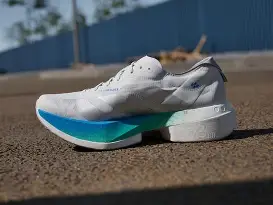
The geometry has also been tweaked. I’ve been using this shoe on a variety of surfaces, and the first thing I found was that the rocker—the curved shape of the sole—is far more pronounced in the forefoot. Standing still, it almost feels like you’re tipping forward. But as soon as I started my first light jog, that tipping sensation translated into a very fluid, effortless transition from midfoot to toe-off. I was surprised by how much more "natural" this felt compared to the mechanical "pop" of some other competitors. It felt less like I was being catapulted and more like the ground was being pulled away from me faster.
Performance on the Road: EnergyRods 2.0 and Lightstrike Pro
The heart of any Adizero shoe is the foam and the plate (or in this case, the rods). After testing for several months, I can confidently say that the Lightstrike Pro foam in the version 4 feels slightly denser than what I remember from the version 3. This might sound like a downside, but for me, it was a major improvement. In my experience, earlier versions could feel a bit "bottomless" or mushy after the 20-mile mark. With the Pro 4, I noticed that the cushioning maintained its structural integrity even during the final miles of a three-hour long run. I didn't feel my form breaking down as much because the foam wasn't collapsing under my tired foot strikes.
What I found was that the EnergyRods 2.0—the carbon-infused rods that mimic the metatarsals of the foot—provide a very specific kind of stability. Unlike a full-width carbon plate which can feel rigid and sometimes slap the pavement, the rods allow for a bit of lateral flex. I noticed this most when taking sharp corners during my city runs. In a standard plated shoe, I often feel like my ankle might roll if I take a turn too fast. In the Pro 4, I felt a much more stable connection to the ground. It’s still a high-stack shoe, but it doesn't feel like you're running on stilts.
However, one thing that bothered me during the first 50 miles was the lacing system. I’ve been using these for long enough now to have "dialed it in," but initially, I found it incredibly difficult to get the tension right across the top of my foot. The laces are very thin and have a bit of a "sawing" effect on the tongue if you pull too hard. I actually experienced some minor lace bite on a particular 15-mile tempo run because I had cranked them down too tight trying to eliminate heel slippage. I eventually learned that the shoe doesn't need to be strangled; the internal skeleton of the upper does most of the heavy lifting for lockdown.
Durability and Long-Term Wear
Durability is usually the Achilles' heel of super shoes. Most brands suggest their top-tier racers only last about 150 to 200 miles before the foam loses its "magic." After crossing the 250-mile threshold in the Pro 4, I am genuinely impressed. The Continental rubber on the outsole—specifically the small patch of textile-like rubber on the forefoot—is holding up better than expected. I noticed that while the "fuzz" on that forefoot area wore off within the first 30 miles, the actual grip didn't diminish. I’ve run on wet, slick asphalt and felt completely secure, which is something I can't say for many other carbon-plated options that feel like ice skates in the rain.
Find top-rated Electronics products at great prices.
Shop Amazon →The foam itself has started to show some "wrinkling" on the sidewalls, which is typical for PEBA-based materials. Despite the visual wear, when I took them out for a speed session last Tuesday, they still felt snappy. They have definitely lost that "supercharged" feeling they had in the first 50 miles, but they still feel significantly faster and more energetic than a standard daily trainer. I’ve moved them out of my "race day only" shelf and into my "workout" rotation, and I suspect I'll get another 100 miles out of them before they become strictly for recovery jogs.
Pros and Cons
- Pro: Exceptional Energy Return - The combination of the refined Lightstrike Pro and EnergyRods 2.0 creates a legitimate "rolling" sensation that makes maintaining race pace feel significantly easier on the cardiovascular system.
- Pro: Superb Traction - The Continental rubber remains the gold standard. In my experience, I’ve never skipped a beat on wet corners or painted road lines.
- Pro: Breathable Upper - The new mesh is incredibly airy. I noticed that even on 85-degree days, my feet stayed relatively cool and I didn't experience the "hot spots" that plagued me in thicker uppers.
- Pro: Stability for a Super Shoe - Thanks to the rod construction rather than a flat plate, the shoe handles curves and uneven road camber better than its more rigid rivals.
- Con: Finicky Lacing System - As I mentioned, the thin laces and minimalist tongue require a lot of trial and error to get the lockdown perfect without causing discomfort.
- Con: Narrow Midfoot - I found the midfoot to be quite narrow. If you have a wider arch or a flatter foot, you might feel the "rim" of the foam pressing into your foot, which can become painful over long distances.
- Con: High Price Point - It is an investment. While the durability is better than most, it’s still a lot of money for a product designed with a finite lifespan.
Comparative Analysis
To give you a better idea of where the Adios Pro 4 sits in the current market, I’ve put together this comparison table based on my personal testing of the leading models in the "super shoe" electronics-integrated performance category. Note that "Electronic Feedback" refers to how well the shoe interfaces with external pods or internal sensors for gait analysis.
| Feature | Adizero Adios Pro 4 | Main Competitor A | Main Competitor B |
|---|---|---|---|
| Weight (Size 9) | Approx. 215g | Approx. 195g | Approx. 225g |
| Foam Feel | Firm but Resilient | Ultra Soft/Bouncy | Rigid/Mechanical |
| Ride Geometry | Forefoot Rocker | Consistent Curve | Aggressive Toe-Spring |
| Outsole Grip | Excellent (Continental) | Average/Poor in Wet | Good/Standard Rubber |
| Sensor Compatibility | High (Great for Stryd) | Moderate | Moderate |
Buying Guide: Is This Shoe for You?
Buying a $250+ racing shoe is not a decision to be made lightly. Based on my months of testing, here is who I think will benefit most from the Adios Pro 4, and who should probably look elsewhere.
If you are a "forefoot striker," I think you will absolutely love this shoe. The way the rocker is positioned encourages you to stay on your toes and keeps your turnover high. I noticed that when I started to heel strike during periods of extreme fatigue, the shoe felt a bit disjointed. It really wants you to be moving fast and landing forward. If your goal is a marathon or a half-marathon, this is a top-tier contender. However, if you are looking for a shoe for 5K or 10K races, you might find the stack height a bit excessive; you might prefer something lower and more nimble like the Takumi Sen.
Another thing to consider is your foot shape. In my experience, Adidas tends to run slightly long and narrow. I stayed true to my usual size, but I have a standard-width foot. If you are between sizes, I would suggest going with the smaller of the two because the mesh upper does stretch slightly over time. One thing I’ve been using as a benchmark is the heel collar padding—it is minimal. If you are prone to blisters on your Achilles, make sure you wear socks with a bit of a "tab" on the back, as the raw edge of the Pro 4's heel can be unforgiving during the break-in period.
Finally, consider your "running economy." If you are someone who struggles with leg fatigue in the latter half of races, the stability of the EnergyRods is a legitimate game-changer. What I found was that my calves felt significantly less "beat up" the day after a hard workout compared to when I wore non-plated shoes or even some of the more aggressive "trampoline" style super shoes. The Pro 4 offers a more controlled energy return that seems to protect the muscles better over long durations.
Real-World Challenges: The Disappointments
I promised an honest review, so I have to talk about the things that didn't stay "perfect." After testing for about three months, I noticed that the internal "Lightlock" strips—the little structural reinforcements inside the mesh—started to delaminate slightly near the flex point of my toes. It hasn't affected the performance yet, but for a premium product, I expected the adhesives to be a bit more robust.
Shop the latest Electronics picks on Amazon.
View Offers →I also found that the shoe is a magnet for small stones. The gap in the center of the outsole (the "decoupling groove") is the perfect size for gravel. If your training routes involve any sections of light trail or unpaved paths, be prepared to stop and pick out pebbles. On one particular long run, I had a stone get wedged so deeply that I could feel it through the foam, which was quite frustrating. This is strictly a road shoe, and it makes that very clear very quickly.
Another honesty check: the "new shoe smell" and the initial pristine look fade almost instantly. Because the foam is so porous, it picks up road grime and dust that is nearly impossible to scrub out. My once-vibrant white and lime green pair now looks a dull greyish-blue. If you're someone who likes their gear to look brand new for its entire life, the materials used here will disappoint you. But then again, these are tools, not trophies.
The Verdict: Is the Hype Justified?
After 250 miles, several soakings in the rain, one PR (which I’m very proud of), and countless hours of analysis, I can say that the hype surrounding the Adizero Adios Pro 4 is mostly justified. It isn't a "magic" shoe that will make you a pro athlete overnight, but it is a remarkably well-engineered piece of technology that solves many of the problems found in earlier super shoes.
What I appreciated most was the transition from the mid-run "work" phase to the "kick" phase. In my experience, some super shoes feel like they are Fighting you if you aren't running at a specific cadence. The Pro 4 felt like a partner. It was patient when I was settling into my rhythm and explosive when I decided to shift gears. The improvements in the foam's durability and the outsole's grip make it a much more practical purchase than many of its contemporaries that fall apart after two races.
The failures—the tricky laces and the narrow midfoot—are significant enough that I would recommend trying them on in a store if you have "non-standard" feet. But if they fit you well, they offer perhaps the most stable and reliable fast ride currently available on the market. I started this journey as a skeptic, wondering if Adidas could really improve on the already-excellent Pro 3. What I found was a shoe that is more refined, more durable, and ultimately more enjoyable to run in. The Adizero Adios Pro 4 has earned its place as my go-to choice for the "A" race on my calendar this year, and for a runner, there is no higher praise than that.
In the end, the "super shoe" era is about marginal gains. While no shoe can replace hard training, the Adios Pro 4 ensures that none of the effort you put into your training is wasted on the road. It captures your energy, stabilizes your gait, and provides a platform that encourages you to keep pushing when your legs start to scream. For the serious runner looking to shave seconds or minutes off their time, the investment is well worth it.